
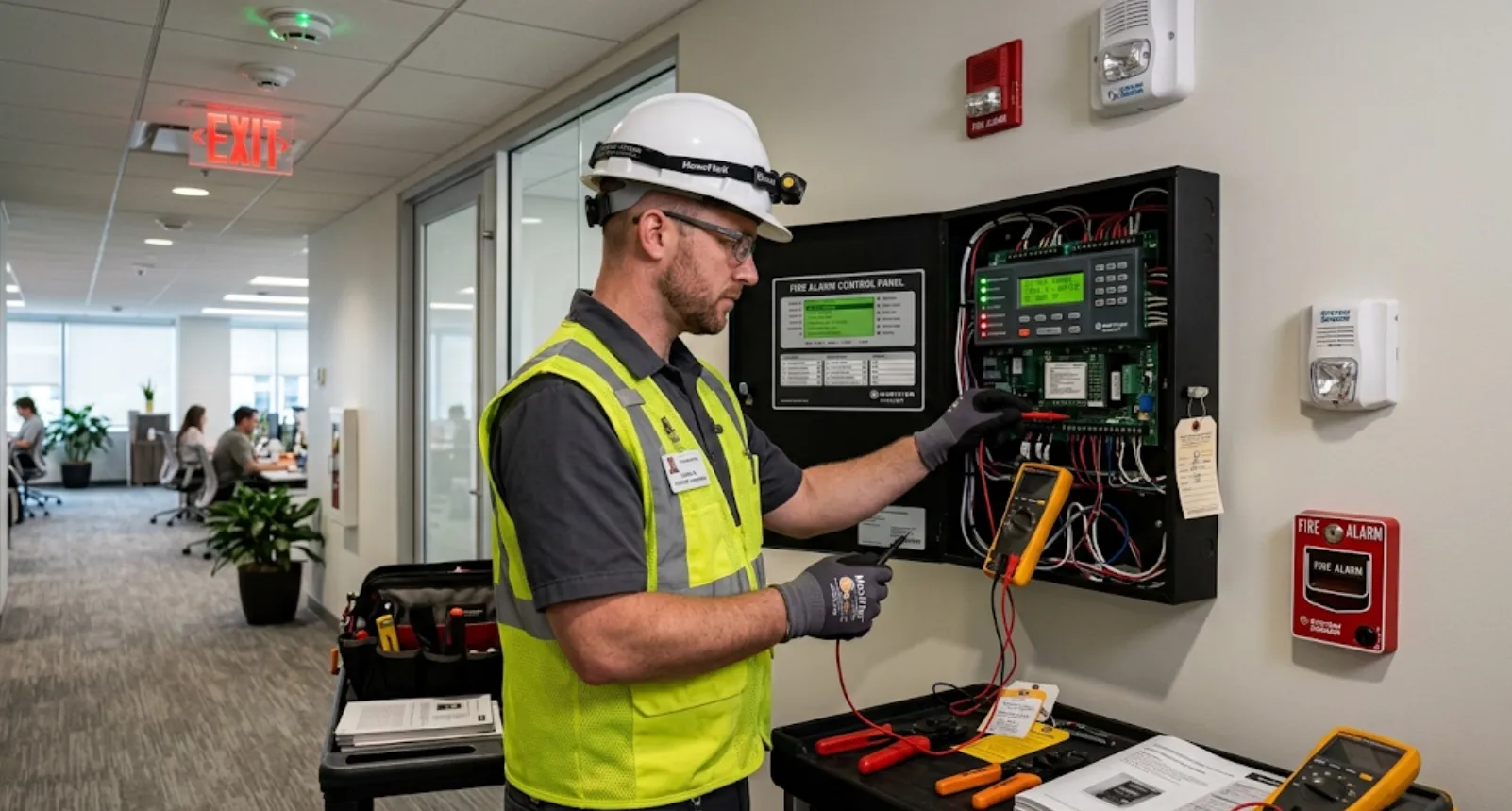
A fire alarm system protects people only if it works properly. But the main thing of concern is that many property owners focus on installing a quality system, and they ignore regular servicing. You must note that like any other electrical equipment, the fire alarms can develop faults over time due to dust, old parts, power fluctuations, or general wear and tear. So, routine inspections are needed because the issues may go unnoticed which may develop issues when they are needed the most.
In 2025, as per the Home Office statistics, there were thousands of fire related incidents in England. This shows that why routine inspections are important. So, if you are managing a warehouse, office, retail premises, apartment building, or family home, then you must choose professional fire alarm installation Manchester services. In this post, you will learn how to keep your system dependable, compliant, and prepared to respond in emergency.
What is Fire Alarm Servicing?
Fire alarm servicing involves the routine inspection, testing, and maintenance of a fire detection system to ensure it continues operating correctly. A professional service may include checking:
1.Control panels
2. Smoke detectors
3. Heat detectors
4. Manual call points
5. Alarm sounders
6. Emergency power supplies
5. Wiring and connections
The objective is simple to identify potential problems before they become real safety risks.
Why Fire Alarm Servicing Matters?
Unlike many electrical systems, a fire alarm may remain unused for months or even years. Because it is rarely activated during normal operations, faults can develop without anyone noticing. A detector covered with dust or a failing backup battery might only become apparent during an emergency, when it is already too late. With regular servicing helps identify these issues early.
Protects Lives
The most important reason to service a fire alarm system is to protect people. A working fire alarm provides early warning, allowing occupants more time to:
1.Evacuate safely
2.Contact emergency services
3.Follow emergency procedures
Even a short delay in alarm activation can significantly affect evacuation time during a fire. Routine servicing helps ensure the system performs as intended.
Keeps Your System Reliable
Like any other electronic equipment, fire alarm components can deteriorate over time. Some of the common issues include:
1.Dust accumulation
2.Sensor contamination
3.Loose wiring
4.Worn batteries
5.Damaged detectors
6.Faulty sounders
Regular inspections allow these problems to be identified before they affect system performance.
Supports Legal and Safety Compliance
Many commercial properties have legal responsibilities regarding fire safety. With routine inspection and maintenance, then it helps demonstrate that fire safety systems are being properly managed. For businesses, schools, healthcare facilities, landlords, and property managers, you must maintain fire alarm
systems as they are an important part of overall fire safety management. The professional fire alarm servicing Manchester providers understand current standards and recommended maintenance procedures.
Reduces False Alarms
False alarms are more than just an inconvenience. They can:
1.Interrupt business operations
2.Cause unnecessary evacuations
3.Reduce confidence in the alarm system
4.Waste valuable emergency resources
Many false alarms result from issues such as contaminated detectors, damaged components, or incorrect system settings. Also, routine servicing helps minimise these avoidable problems.
Extends the Life of Your Fire Alarm System
Replacing an entire fire alarm system can be a significant investment. Regular maintenance helps extend the working life of components by identifying wear before major failures occur. Simple preventative maintenance often proves far more cost-effective than emergency repairs or complete replacements.
Detects Hidden Faults
Not every problem is obvious. A fire alarm panel may appear normal even though:
1.A detector has failed
2.A cable has been damaged
3.A backup battery has weakened
4.A communication fault has developed
Professional servicing includes system testing that identifies hidden faults which may not be visible during everyday operation.
Verifies Backup Power
Fire alarm systems are designed to continue operating during mains power interruptions. This depends on healthy backup batteries. During servicing, engineers check:
1.Battery condition
2.Charging performance
3.Backup operation
Weak batteries should be replaced before they become unreliable.
Ensures Every Detector Works Correctly
Different areas of a property may use different types of detectors. These can include:
1.Smoke detectors
2.Heat detectors
3.Multi-sensor detectors
Each device should be tested to confirm it responds correctly. Servicing also confirms detectors that remain suitable for the environment in which they operate.
Protects Your Business
For commercial properties, fire can interrupt operations long after the flames are extinguished. The business disruption may include:
1.Temporary closure
2.Equipment damage
3.Stock losses
4.Repair costs
5.Lost revenue
A properly maintained fire alarm system will improve the chances of detecting a fire early, and help reduce potential damage.
Supports Insurance Requirements
Insurance providers may expect businesses to maintain safety systems appropriately. Although requirements vary between insurers and policies, maintaining fire protection equipment demonstrates responsible risk management. You must keep maintenance records can also be useful if documentation is required.
What Happens During a Fire Alarm Service?
A professional engineer typically carries out several checks during routine servicing which covers:
1.Testing detectors
2.Checking manual call points
3.Inspecting the control panel
4.Verifying alarm sounders
5.Testing emergency power
6.Reviewing fault history
7.Confirming communication between devices
8.Inspecting visible wiring
If there are any faults identified, then it can then be repaired or scheduled for corrective work.
How Often Should Fire Alarms Be Serviced?
The appropriate servicing schedule depends on the property, the system installed, and the applicable fire safety requirements. While the many commercial systems are professionally inspected at regular intervals throughout the year as part of planned maintenance programmes, it is the high-risk or heavily occupied premises that may require more frequent attention. A qualified provider of fire alarm servicing Manchester can recommend an appropriate maintenance schedule.
Signs Your Fire Alarm System Needs Attention
Don't wait until scheduled servicing if you notice:
1.Warning lights on the control panel
2.Fault messages
3.Repeated false alarms
4.Missing detector covers
5.Damaged call points
6.Weak alarm sound
7.Battery warnings
8.Physical damage
Any unusual behaviour should be investigated promptly.
Fire Alarm Maintenance vs Fire Alarm Servicing
These terms are often used together, but they have slightly different meanings.
Fire Alarm Servicing
- Focuses on routine inspection and testing to confirm the system is operating correctly.Fire Alarm Maintenance
-Thismay also include repairing faults, replacing components, updating equipment, and restoring full system performance.Both play an important role in long-term fire safety.
The Importance of Accurate Records
Keeping service records provides evidence that maintenance has been carried out. One of the typical documentations may include:
1.Service dates
2.Engineer findings
3.Faults identified
4.Repairs completed
5.Components replaced
6.Recommended future work
Good record keeping supports effective ongoing system management.
Why Professional Servicing Matters?
Although property owners can carry out simple routine checks recommended by the manufacturer or responsible person guidance, comprehensive servicing should be performed by trained professionals. If you want to select a provider for fire alarm installation Manchester, then consider more than just the installation part. Regular servicing helps identify these issues before they compromise safety, improves reliability, reduces false alarms, supports compliance, and extends the life of the system. After all, the best time to discover a fault in your fire alarm system is during a scheduled service, not during a real emergency.