A business premises can have strong doors, locks, alarms and CCTV, yet still have a basic security problem such as who is actually allowed to enter, and where can they go once, they are inside? As the businesses become more dependent on offices, warehouses, equipment rooms, server areas and restricted workspaces, then controlling the physical access has become an important part of everyday security.
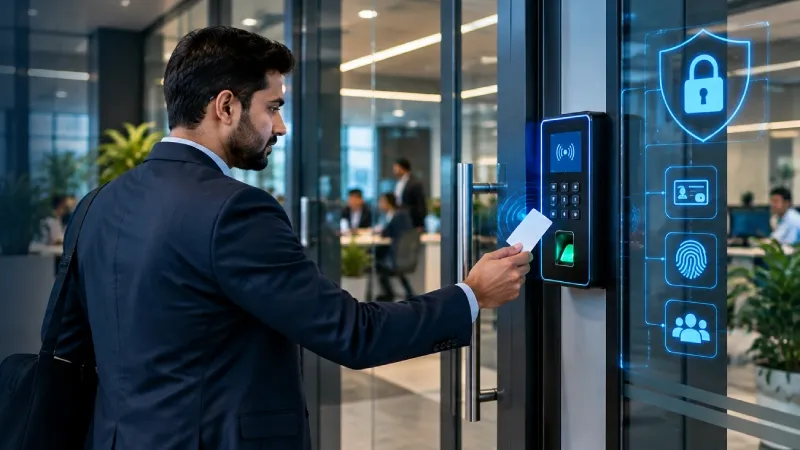
Modern access control systems give businesses a more organized way to manage entry. Instead of relying entirely on traditional keys, companies can use cards, fobs, PINs, mobile credentials, biometric identification and other technologies to determine who can enter specific areas and when. This creates a more controlled environment while making it easier to manage employees, visitors, contractors and temporary access
For businesses looking at access control systems, the goal should not simply be to install an electronic door lock. A properly planned system should fit the building, working patterns, security risks and operational requirements of the organization. Professional access control installation in Manchester can help businesses implement a reliable security system that protects people, property and restricted areas while allowing authorised staff to move around the premises efficiently.
What is an Access Control System?
An access control system is a security solution designed to determine who is permitted to enter a particular building, room or restricted area. Depending on the system, users may authenticate themselves through an access card, key fob, PIN, mobile device or biometric identifier.
The system can then decide whether access should be granted based on factors such as the person's identity, role, and location and permitted time. This is particularly useful when different parts of a business have different security requirements. For instance, every employee may be allowed into the main office, while only selected staff can enter a server room, stockroom, and management office or equipment area. UK security guidance highlights the importance of controlling physical access to systems and information, particularly where sensitive equipment or essential business functions are involved.
Control Who Can Enter Your Business
One of the biggest advantages of access control is simple that you decide that who will get access. While the traditional keys can be copied, misplaced or passed between people, and once a key has been handed over, it can also become difficult to know who is using it. The electronic access control provides greater control while a business can issue individual credentials to employees and define which doors they can use. For instance, a company might allow:
1.General employees to access the main entrance and office areas
2.Managers to access additional restricted rooms
3.IT staff to access server and networking areas
4.Warehouse employees to access storage facilities
5.Contractors to receive temporary access during approved working hours
This makes physical security more closely connected to employees' actual responsibilities.
Protect Sensitive Areas inside the Building
Security should not stop at the front entrance because many businesses have areas containing equipment, confidential documents, valuable stock or sensitive information. By allowing everyone to enter these areas, then it increases unnecessary risk. Consider this instance that a Manchester office has a dedicated server room while the employees may need access to their workstations, meeting rooms and common areas, but there may be no operational reason for most employees to enter the server room. With an access control system, the company can restrict that room to authorized personnel.
The same principle can apply to server rooms, data storage areas, cash offices, management offices, warehouses, laboratories, equipment rooms, records storage and staff-only areas. This approach creates multiple security boundaries rather than treating the entire building as one open space.
Know Who Entered and When
Another important advantage is visibility because modern access control systems can maintain records of access events, providing information about when credentials were used and which access point was involved. The National Protective Security Authority identifies the audit trails and reporting as an important feature of automatic access control systems because they can support monitoring and investigations following security incidents. For instance, a piece of expensive equipment goes missing from a restricted room.
However, with a conventional key, the investigation may begin with a long list of people who potentially had access. But with an appropriately configured electronic system, the authorized personnel can review access records and establish which credentials were used to enter the area during the relevant period. Also, it does not automatically prove who committed an incident, but it can provide useful information for understanding what happened.
Make Employee Access Easier to Manage
Managing physical keys can become surprisingly complicated as a company grows. Although a small business might have a handful of employees and only a few doors, but once the organization has dozens or hundreds of employees, multiple departments and several restricted areas, then manually managing keys becomes increasingly difficult.
An access control system provides a centralized way to manage permissions as when an employee joins the organization, their access can be configured according to their role. And when they move to another department, their permissions can be changed. Also, when they leave, their credentials can be disabled without requiring the business to recover and replace every physical key they may have possessed. This supports the broader security principle of regularly reviewing and removing access that is no longer required.
Improve Security without Making the Workplace Difficult
Good security should not create unnecessary frustration for employees. If you are accessing a building becomes too complicated, staff may look for shortcuts, share credentials or find ways around procedures. That can undermine the purpose of the security system. A properly designed access control solution aims to balance protection with convenience. For instance, employees may use contactless cards or fobs for routine entry, while higher-security areas may require stronger authentication.
The system should also consider how employees move around the building during normal working hours, shift changes, deliveries and emergencies. The UK government guidance recommends considering both security requirements and ease of legitimate access when planning access control.
Manage Visitors and Contractors More Effectively
Businesses often have people entering their premises who are not permanent employees. These may include Contractors, Delivery personnel, Maintenance engineers, Cleaning teams, Temporary workers, Clients and visitors and External service providers. Giving these individuals unrestricted access is unnecessary in many situations. Therefore, a modern access control setup can work alongside visitor management procedures so temporary access is limited to the areas and periods that are actually required.
For instance, a contractor working on electrical equipment might need access to a particular plant room for several hours. There is little reason for that credential to provide access to offices or sensitive storage areas. This creates a more controlled visitor experience while reducing unnecessary exposure.
Connect Access Control with CCTV and Other Security Systems
Access control does not have to operate independently. It can form part of a wider security environment that includes CCTV, intruder alarms, intercoms, monitoring systems and other protective technologies. For instance, an access event can be associated with video footage from the relevant entrance. So, if an unusual access event occurs, then the security personnel may have both the electronic access record and visual information to review.
The NPSA notes that automatic access control can be integrated with physical security, video surveillance and intruder detection systems that create a more comprehensive security solution. Such type of integration can be especially valuable for larger premises where multiple security technologies need to work together.
Reduce the Risks Associated With Lost Keys
Lost keys can create an obvious security problem. If an employee loses a traditional key, then the business has to consider where the key might end up and whether the associated lock should be replaced. With the electronic credentials, the response can be considerably more straightforward like a lost card or fob can potentially be deactivated, preventing it from being used for future access. Also, a replacement credential can then be issued without necessarily changing the physical locking mechanism. This can make access management more practical for organizations with a large workforce.
Access Control is About More Than Locked Doors
The real value of an access control system is not simply that it locks a door.
It gives a business a structured way to manage anyone’s entry, and becomes increasingly important as the organizations grow, employ more people, operate multiple departments or handle valuable equipment and sensitive information.
For the businesses searching for access control systems Manchester region, then the right solution should therefore be based on the actual risks and operational needs of the premises rather than simply choosing the most advanced technology available.
Remember, the security is strongest when different layers work together. CCTV can help monitor activity, while the access controls installation system can be an important step towards creating a safer, better-managed workplace. The right system should protect restricted areas, support employees, provide useful access records and integrate naturally with the wider security strategy of the business.